Global Hunger and Malnutrition Crisis: A Growing Threat to Health and Development
More than 600 Million people worldwide are projected to face hunger issues in 2030.
1 in 3 people struggle with moderate to severe Food Insecurity.
High Food Prices continue to plague many nations (over 20%).
Little to No progress has been made in reducing Anaemia worldwide since 2000.
Malnutrition persists worldwide, jeopardizing children’s well-being and future development. An estimated 230 million children under the age of 5 suffer from malnutrition.
Major Goals
Everyone can help to make sure that we meet the Global Goals. Use these eight targets to eradicate world hunger.

UNIVERSAL ACCESS TO SAFE AND NUTRITIOUS FOOD
By 2030, end hunger and ensure access by all people, in particular, the poor and people in vulnerable situations, including infants, to safe, nutritious, and sufficient food all year round.

END ALL FORMS OF MALNUTRITION
By 2030, end all forms of malnutrition, including achieving, by 2025, the internationally agreed targets on stunting and wasting in children under 5 years of age, and address the nutritional needs of adolescent girls, pregnant and lactating women and older persons.

DOUBLE THE PRODUCTIVITY AND INCOMES OF SMALL-SCALE FOOD PRODUCERS
By 2030, double the agricultural productivity and incomes of small-scale food producers, in particular women, indigenous peoples, family farmers, pastoralists and fishers, including through secure and equal access to land, other productive resources and inputs, knowledge, financial services, markets and opportunities for value addition and non-farm employment.

SUSTAINABLE FOOD PRODUCTION AND RESILIENT AGRICULTURAL PRACTICES
By 2030, ensure sustainable food production systems and implement resilient agricultural practices that increase productivity and production, that help maintain ecosystems, that strengthen capacity for adaptation to climate change, extreme weather, drought, flooding and other disasters and that progressively improve land and soil quality.

MAINTAIN THE GENETIC DIVERSITY IN FOOD PRODUCTION
By 2020, maintain the genetic diversity of seeds, cultivated plants and farmed and domesticated animals and their related wild species, including through soundly managed and diversified seed and plant banks at the national, regional and international levels, and promote access to and fair and equitable sharing of benefits arising from the utilization of genetic resources and associated traditional knowledge, as internationally agreed.

INVEST IN RURAL INFRASTRUCTURE, AGRICULTURAL RESEARCH, TECHNOLOGY AND GENE BANKS
Increase investment, including through enhanced international cooperation, in rural infrastructure, agricultural research and extension services, technology development and plant and livestock gene banks in order to enhance agricultural productive capacity in developing countries, in particular least developed countries.

PREVENT AGRICULTURAL TRADE RESTRICTIONS, MARKET DISTORTIONS AND EXPORT SUBSIDIES
Correct and prevent trade restrictions and distortions in world agricultural markets, including through the parallel elimination of all forms of agricultural export subsidies and all export measures with equivalent effect, in accordance with the mandate of the Doha Development Round.

ENSURE STABLE FOOD COMMODITY MARKETS AND TIMELY ACCESS TO INFORMATION
Adopt measures to ensure the proper functioning of food commodity markets and their derivatives and facilitate timely access to market information, including on food reserves, in order to help limit extreme food price volatility.
Why is there so much Hunger?
The global issue of hunger and food insecurity has shown an alarming increase since 2015, a trend exacerbated by a combination of factors including the pandemic, conflict, climate change, and deepening inequalities.
By 2022, approximately 735 million people – or 9.2% of the world’s population – found themselves in a state of chronic hunger – a staggering rise compared to 2019. This data underscores the severity of the situation, revealing a growing crisis
In addition, an estimated 2.4 billion people will face moderate to severe food insecurity in 2022. This classification signifies their lack of access to sufficient nourishment. This number escalated by an alarming 391 million people compared to 2019.
The persistent surge in hunger and food insecurity, fueled by a complex interplay of factors, demands immediate attention and coordinated global efforts to alleviate this critical humanitarian challenge.
Extreme hunger and malnutrition remains a barrier to sustainable development and creates a trap from which people cannot easily escape. Hunger and malnutrition mean less productive individuals, who are more prone to disease and thus often unable to earn more and improve their livelihoods.
2 billion people in the world do not have regular access to safe, nutritious and sufficient food. In 2022, 148 million children had stunted growth and 45 million children under the age of 5 were affected by wasting.
Shockingly, the world is back at hunger levels not seen since 2005, and food prices remain higher in more countries than in the period 2015–2019. Along with conflict, climate shocks, and rising cost of living, civil insecurity and declining food production have all contributed to food scarcity and high food prices.
Investment in the agriculture sector is critical for reducing hunger and poverty, improving food security, creating employment and building resilience to disasters and shocks.
How can we achieve Zero Hunger? Food security requires a multi-dimensional approach – from social protection to safeguard safe and nutritious food, especially for children to transforming food systems to achieve a more inclusive and sustainable world. There will need to be investments in rural and urban areas and in social protection so poor people have access to food and can improve their livelihoods.
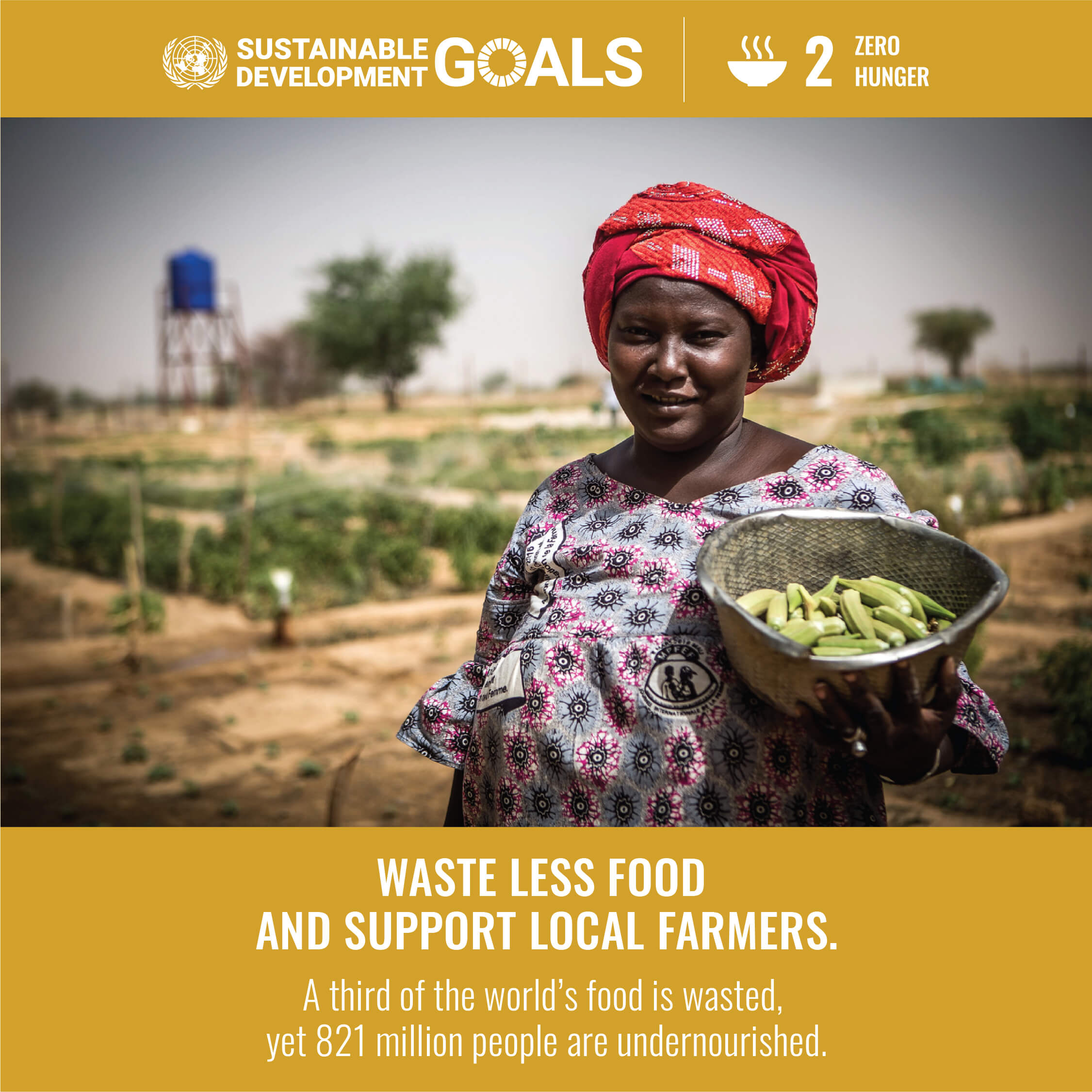
What can we do to help? You can make changes in your own life—at home, at work, and in the community—by supporting local farmers or markets and making sustainable food choices, supporting good nutrition for all, and fighting food waste.